
Why Long COVID Patients May Feel Worse After Small Amounts of Activity
A shower should not be exhausting. Neither should standing at the counter to make lunch, or walking to the mailbox, or a single flight of stairs. Before COVID, these were nothing. You did them without a thought. Now they can cost you. A short, ordinary activity is followed by a racing heart, a swimming head, […]
What People With Ehlers-Danlos Syndrome Should Know About Pregnancy

Learning that you are pregnant, or thinking about becoming pregnant, can bring a mix of excitement and questions. For people living with Ehlers-Danlos syndrome, those questions often carry an extra layer. EDS affects connective tissue, the material that gives structure and support to joints, skin, blood vessels, and organs, so it makes sense to wonder […]
When Ehlers-Danlos, POTS, and Mast Cell Symptoms Appear Together

Living in a body that seems to have several problems at once can be exhausting and confusing. Maybe your joints have always been loose and prone to slipping. Maybe standing up makes your heart race and your head feel light. Maybe certain foods, medications, or even changes in temperature seem to set off flushing, hives, […]
Why Common Exercise Advice Can Backfire for Hypermobile Bodies
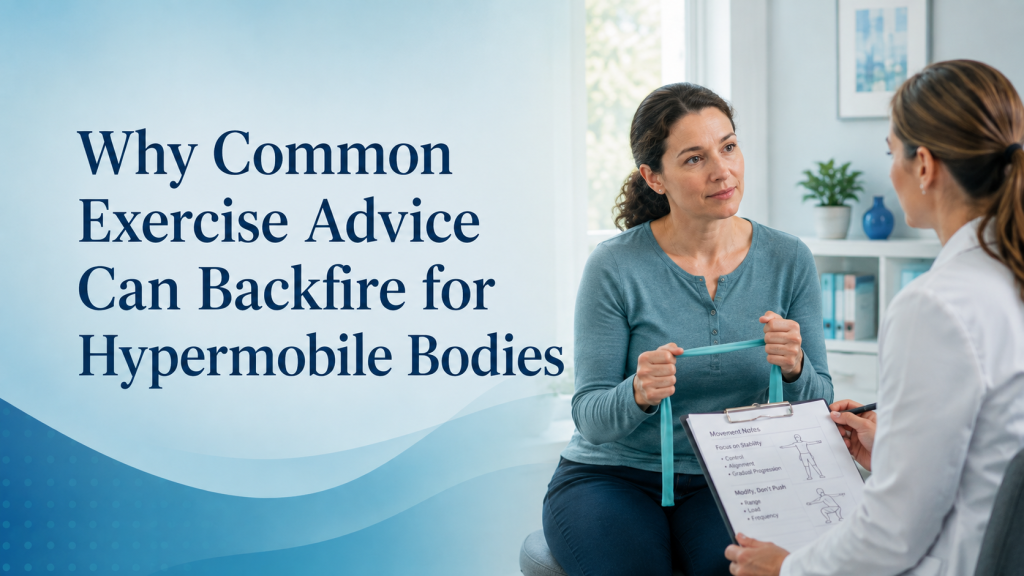
If you live with very flexible joints, you have probably been handed a lot of exercise advice over the years. Some of it comes from well meaning friends, some from trainers, and some from articles that promise a single routine will fix everything. The trouble is that most general fitness guidance is written for bodies […]
The Skin and Tissue Signs That Can Point Toward Ehlers-Danlos Syndrome
For many people, Ehlers-Danlos syndrome brings to mind bendy joints and party-trick flexibility. That picture is real, but it is far from complete. Ehlers-Danlos syndrome is a group of connective tissue conditions, and connective tissue is not limited to the joints. It also gives the skin its strength, stretch, and ability to heal. Because of […]
Why Frequent Joint Dislocations and Subluxations Should Not Be Overlooked
If a shoulder that slides out of place while you reach for a high shelf, a knee that gives way on the stairs, or a finger that pops out and slips back on its own has become a normal part of your week, you are not imagining it and you are not alone. Many people […]
What to Expect During an Ehlers-Danlos Syndrome Evaluation
When people first hear the term Ehlers-Danlos syndrome, they often picture a single condition with a single set of symptoms. The reality is more layered. Ehlers-Danlos syndrome is an umbrella term for a group of related connective tissue disorders, and the differences between them can matter a great deal when it comes to understanding your […]
Understanding the Different Types of Ehlers-Danlos Syndrome
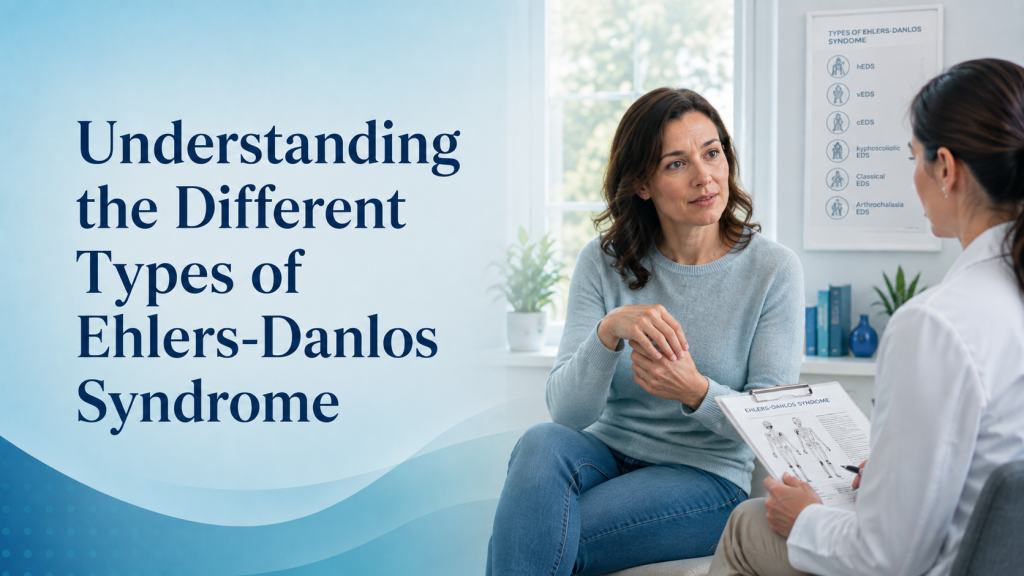
When people first hear the term Ehlers-Danlos syndrome, they often picture a single condition with a single set of symptoms. The reality is more layered. Ehlers-Danlos syndrome is an umbrella term for a group of related connective tissue disorders, and the differences between them can matter a great deal when it comes to understanding your […]
When Being Double Jointed Might Be More Than Just Being Flexible
Maybe you have always been the person who can bend a thumb back toward the wrist, fold flat to the floor with ease, or pop a shoulder in and out to make friends laugh. For much of your life, being double jointed may have felt like a harmless party trick or simply proof that you […]
When Multiple Symptoms Point Toward a Bigger Autonomic Pattern
Taken one at a time, each of your symptoms has an explanation. The dizziness, you have been told, could be many things. The stomach trouble, something else. The racing heart, perhaps anxiety. The fatigue, maybe stress or poor sleep. Each symptom, on its own, was given an answer, and the answer was always small. But […]
